
Introduction
When selecting components for heavy-duty machinery, engineers often face a critical choice: **Forging vs. Casting**. While casting is common for complex shapes, **custom steel forgings** are the gold standard for applications requiring extreme strength and reliability. In this guide, we explore why forging is the preferred manufacturing process for critical industries like Oil & Gas, Aerospace, and Mining.
2. The Science of Strength: Grain Flow
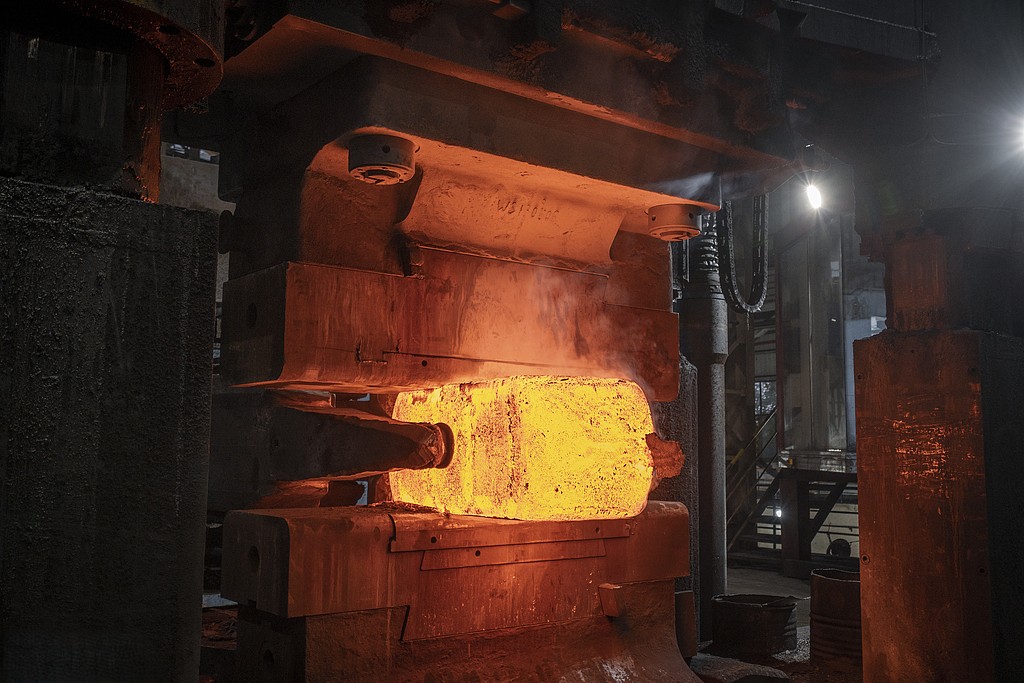
The fundamental difference lies in the internal structure. During the **custom forging process**, the metal’s grain structure is mechanically deformed to follow the shape of the part. This continuous grain flow eliminates internal voids and porosity, which are common in castings.
- Forging: Refined grain structure leads to higher impact strength.
- Casting: Random grain orientation and potential for internal gas pockets.
3. Forged Alloy, Stainless & Titanium: Material Performance
The benefits of forging vary across different high-performance materials:
- Alloy Steel Forging: Enhances the toughness of grades like 4140 and 4340, essential for high-torque shafts.
- Stainless Steel Forging: Improves the corrosion resistance and structural integrity of 316L and Duplex 2205 parts used in subsea environments.
- Titanium Alloy Forging: Maximizes the strength-to-weight ratio for aerospace components where failure is not an option.
4. Mechanical Property Comparison
| Feature | Forging | Casting |
| Structural Integrity | Excellent (No internal voids) | Fair (Risk of porosity) |
| Impact Strength | Very High | Lower |
| Fatigue Resistance | Superior | Moderate |
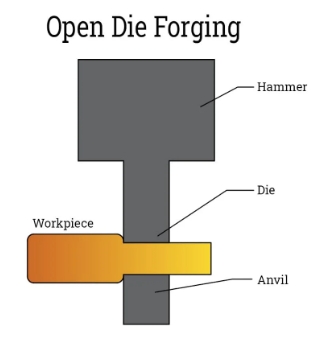
| Customization | High (via Open-Die) | High (Complex shapes) |
5. Cost-Benefit Analysis: Beyond the Initial Price
While casting might seem cheaper upfront, **industrial forging solutions** offer better long-term value. Forgings require less secondary machining and have a significantly lower failure rate. For high-stress environments, the cost of a single component failure far outweighs the investment in a high-quality forged part.
6. FAQ Section
- Q: Can forging handle complex geometries?
- A: Yes, through custom forging manufacturing, we can achieve near-net shapes that minimize material waste.
- Q: Does forging improve corrosion resistance?
- A: In stainless steel, the forging process ensures a more uniform chemical distribution, which helps maintain the protective oxide layer.
- Q: Is forging suitable for low-volume prototypes?
- A: Absolutely. Our open-die forging service is ideal for low-volume, high-spec custom projects.